Structural Drying & Dehumidification in Four Oaks, NC
Getting the water out is only half the job. Air movers and commercial dehumidifiers dry the framing, subfloor, and wall cavities to a verified standard, not just the surface.
(984) 309-3140Tap to call our 24/7 dispatch line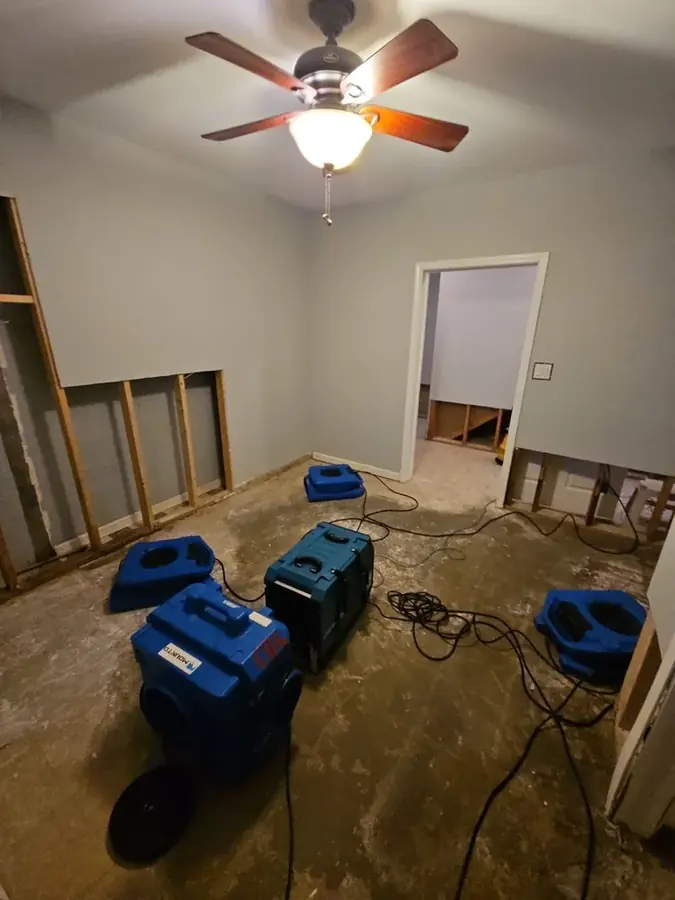
Extraction removes the water you can see, but the water that soaked into framing, subfloor, drywall, and the crawl space is what quietly rots a house and grows mold. Structural drying is the science of pulling that hidden moisture back out and proving it is gone. Restoration Pros NC uses commercial air movers and low grain refrigerant dehumidifiers, placed and balanced for your specific loss, and we monitor the readings daily so the structure is dried to a verified target, not just dry to the touch.
How we handle structural drying and dehumidification in Four Oaks
Call and dispatch
A real person answers 24/7 and the nearest Four Oaks crew rolls with pumps, air movers, and moisture meters.
On-site assessment
We find the source and the full reach of the water, including what soaked into subfloor, crawl space, and wall cavities.
Extract and dry
We pull the standing water, then run air movers and dehumidifiers to a verified dry standard, not just the surface.
Verify and bill
We log moisture readings until the structure is dry, then document the loss and bill your carrier directly.
Why the surface drying is not enough
A house holds water in places a fan will never reach:
- Framing and studs behind the drywall stay wet long after the surface dries
- Subfloor and the pad beneath flooring hold water against the structure
- A crawl space or slab gives up moisture slowly in humid air
- Wall cavities trap humidity that feeds mold if it is not actively removed
Carolina humidity works against natural drying, which is why open windows and box fans are not enough. The EPA guidance on moisture and mold is clear that a structure has to be dried, and the IICRC sets the standard our crews dry to.
Water spreading right now?
Water pulled out but the walls still feel damp? Call now. A local crew sets commercial drying equipment and monitors it to a verified dry standard.
How structural drying works
Drying is a controlled process, not just running some fans:
- We map the wet areas with moisture meters and thermal imaging after extraction
- Air movers are placed to move air across every wet surface and into cavities
- LGR dehumidifiers pull the released moisture out of the air so it cannot resettle
- We log readings daily and adjust the equipment until the structure hits its dry target
This is the step that protects your home after any loss, from a burst pipe to a storm flood. Drying to a documented standard is also what lets a contractor rebuild with confidence that the structure is truly dry.
Dry to the touch is not dry enough
A wall can feel dry on the surface while the framing behind it still reads wet on a meter. Rebuilding over a wet cavity traps the moisture and invites mold. We dry to a measured target and prove it with readings before anyone closes it back up.
Insurance and the drying record
The daily drying log is one of the most useful documents in a water claim:
- Initial moisture readings that establish the extent of the loss
- Daily readings that show the structure drying over time
- Final readings that confirm a dry, verified target was reached
- Direct billing to your carrier for covered work
"After the water was pulled out I figured a couple fans would finish it, but they showed me on the meter how wet the walls still were. They set real equipment, checked it every day, and did not stop until it was actually dry. That is why we did not end up with mold."
Curtis L. · McGee's Crossroads, Benson · May 2026
Why Johnston County calls us first
On-site in 60 to 90 minutes
A person answers 24/7 and the nearest crew rolls the moment you call, day or night, across Johnston County.
IICRC-certified crews
Trained technicians with pumps, air movers, and moisture meters who dry to a verified standard, not a mop and a box fan.
We bill your insurer
We document the loss with photos and readings and work with your carrier directly, so the paperwork is not on you.
Deep local knowledge
Crawl spaces, septic drain fields, tropical-storm flooding, and clay-heavy yards. We know how water moves in Johnston County.
From Four Oaks across Johnston County
Based in Four Oaks on S Main St, we respond county-wide, day or night.
Based in Four Oaks on S Main St, our crews cover all of Johnston County and its edges, day or night, and reach most homes in 60 to 90 minutes.
We serve Four Oaks, Smithfield, Benson, Clayton, Selma, Pine Level, Princeton, Kenly, Angier, and Garner.
See every town and ZIP we serve ›Related restoration services
Four Oaks water damage questions, answered
Why can't I just use my own fans to dry it out?
Household fans move surface air but do not pull moisture from framing, subfloor, a slab, or a crawl space, and they do nothing about the humidity in the air. Commercial air movers plus dehumidifiers remove the water the structure is holding, which is what prevents mold.
How long does structural drying take?
Most losses dry in 3 to 5 days, longer for a saturated crawl space, a slab, or hardwood. Carolina humidity slows it, so we monitor daily and keep the equipment running until the readings confirm a dry target rather than guessing.
How do you know when it is dry?
We take daily moisture readings with meters and compare them to a dry standard for each material. Only when the readings confirm the structure has reached that target do we pull the equipment and call it dry.
Will the equipment be loud or in the way?
Air movers and dehumidifiers do run continuously and make some noise, but that constant airflow is what dries the structure. We place them to work efficiently and remove them as areas reach their dry target.
Does drying prevent mold?
Fast, thorough drying is the single best defense against mold, because mold needs moisture to grow. Drying the structure to a verified standard within the first days removes the moisture before mold can take hold.
Is structural drying covered by insurance?
Drying is a core part of mitigating a covered water loss, so it is typically included. The daily drying log we keep is exactly the documentation your adjuster wants, and we bill your carrier directly.
A local Four Oaks crew is standing by
Water sitting means damage spreading. Call Restoration Pros NC and a local crew is on the way, 60 to 90 minutes out across Johnston County.
(984) 309-3140Call now, a local crew picks up day or night