Water Heater Failure & Flooding in Four Oaks, NC
When a water heater lets go, it floods the room it sits in and the walls around it. The extraction crew extracts the water, dry the slab and framing, and check for hidden wicking.
(984) 309-3140Tap the 24/7 Johnston County dispatch line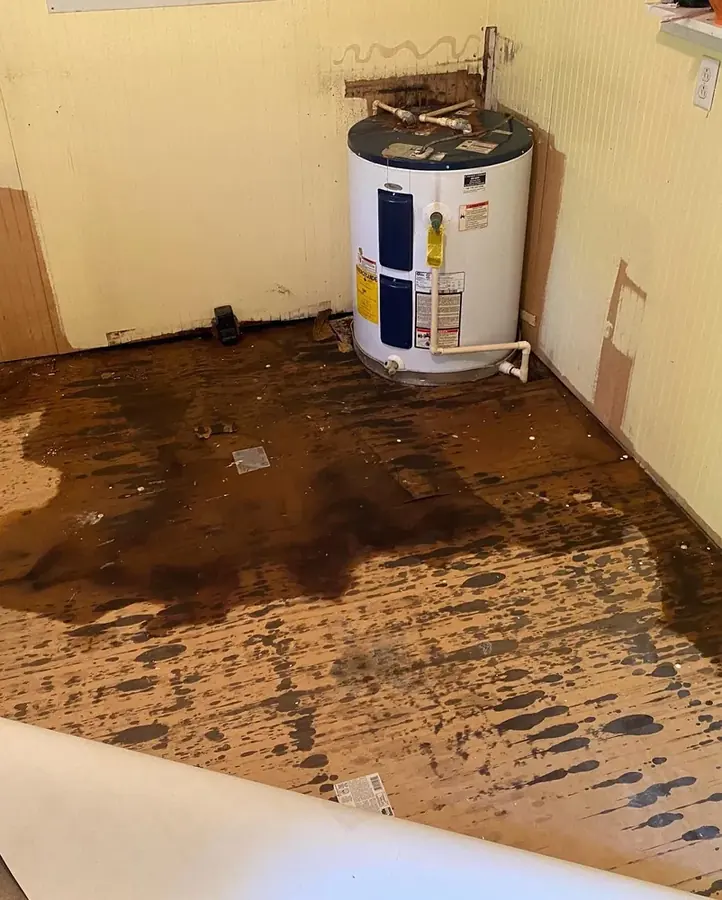
A water heater holds forty to eighty gallons, and when the tank finally rusts through or a fitting fails, all of it ends up on the floor, followed by whatever the supply line keeps feeding in until the water is shut off. Because heaters usually sit in a garage, a utility closet, or a crawl space, the flood spreads into the framing and the rooms next door before anyone notices. Restoration Pros NC extracts the water, dries the structure, and checks for the moisture that wicks out of sight.
How water heater failure and flooding is handled in Four Oaks
Call and dispatch
A real person answers 24/7 and the nearest Four Oaks crew heads out with pumps, air movers, and moisture meters.
Assess and stop it
The crew finds the source and the full reach of the water, including what soaked into subfloor, crawl space, and wall cavities.
Extract and dry
The extraction crew pulls the standing water, then runs air movers and dehumidifiers to a verified dry standard, not just the surface.
Verify and document
The drying team logs moisture readings until the structure is dry, then documents the loss with the photos and daily readings an adjuster needs to move a claim.
Why water heaters fail here
Tanks wear out, and a few things speed it up:
- Age, most tanks last 8 to 12 years, and sediment and corrosion do the rest
- Sediment buildup from well water and hard water that rusts the tank from the bottom
- A failed temperature and pressure relief valve or a corroded fitting
- A slow weep that soaks the base for weeks before the tank finally lets go
The first move if you can reach it safely is to shut the water supply to the heater and cut its power or gas, then call. Ready.gov has good basic guidance on staying clear of water near outlets and appliances until the power is off.
Water spreading right now?
Water heater flooding the garage or closet? Shut its water and power if you can, then call. A local crew extracts and dries it before it reaches the framing.
The water heater cleanup process
A heater flood looks simple but the water travels, so crews chase all of it:
- Confirm the water and power to the heater are off and extract the standing water
- Check the adjoining walls, the crawl space below, and any room the water reached
- Dry the slab, framing, and wall base with air movers and dehumidifiers
- Monitor moisture with meters until it reads dry, then document for your claim through the structural drying program
A tank that sat on a slab in a garage will push water under the plate and into the wall, and the EPA notes that a wall base left wet is exactly where mold starts. The drying team dries the cavity, not just the floor.
A little water now can mean a soaked wall later
Even a slow water heater weep can wick up into drywall and soak the wall plate and framing for weeks before you see a stain. When a tank finally floods, the surface may dry while the cavity stays wet, so the crew checks behind the wall before calling it done.
Insurance and documentation
A sudden tank failure is usually a covered loss, and crews keep the record your adjuster needs:
- Photos of the failed heater and the water before cleanup
- A written scope of what was dried or removed
- Daily moisture readings until the structure is dry
- Claim-ready documentation for covered work
Why Johnston County calls the local pros first
Rapid local response
Whoever answers the Four Oaks line picks up 24/7, and the nearest crew heads out the moment you call, day or night, across Johnston County.
IICRC S500 drying standard
Trained crews with pumps, air movers, and moisture meters dry to a verified standard, not a mop and a box fan.
Claim-ready documentation
The response team documents the loss with photos and daily moisture readings, the paperwork an adjuster needs to move a claim.
Local water experts
Crawl spaces, septic drain fields, tropical-storm flooding, and clay-heavy yards. The local pros know how water moves in Johnston County.
From Four Oaks across Johnston County
Based in Four Oaks, the local crews respond county-wide, day or night.
Based in Four Oaks, the local crews cover all of Johnston County and its edges, day or night, with rapid local response.
Coverage runs across Four Oaks, Smithfield, Benson, Clayton, Selma, Pine Level, Princeton, Kenly, Angier, and Garner.
See every town and ZIP covered ›Related restoration services
Four Oaks water damage questions, answered
What do I do when my water heater floods?
If you can reach it safely, shut the cold water supply valve at the top of the tank and cut its power at the breaker or turn off the gas, then call. Stay clear of the water if it is near outlets or the panel. Crews handle the rest.
How much water comes out of a failed water heater?
A tank holds roughly 40 to 80 gallons, and it all drains when the tank fails, plus whatever the supply line keeps feeding in until the water is shut off. That is why a heater failure floods the room and the walls around it so fast.
Why do water heaters fail in this area?
Age is the main reason, since most tanks last 8 to 12 years, but sediment from well water and hard water rusts the tank from the bottom and speeds it up. A corroded fitting or a failed relief valve can also let go suddenly.
Do you replace the water heater?
The crew handles the water cleanup and drying and coordinates a local plumber to replace the tank, so the cleanup and the new heater move together.
Can a small heater leak really cause damage?
Yes. A slow weep can soak the base plate and wick up into the drywall for weeks before you notice, quietly feeding mold. The crew checks the wall base and framing, not just the visible floor.
Is a water heater failure covered by insurance?
A sudden tank failure is usually a covered water loss. The response team documents the failed heater and the damage and document the loss for your carrier, so you generally pay only your deductible.
A local Four Oaks crew is standing by
Water sitting means damage spreading. Call Restoration Pros NC and a local crew heads out across Johnston County, day or night.
(984) 309-3140Call now, the Johnston County line picks up 24/7